
Knowing how to pack a diaper bag for travel is one of the most important skills a parent can master before hitting the road or boarding a plane with a baby. Diaper bag essentials, smart organization, and the right packing strategy can mean the difference between a stressful travel day and a surprisingly smooth family adventure. Whether you are heading out on a long-haul flight, a road trip with baby, or a weekend family getaway, this guide covers everything you need — organized by category, tailored by trip type, and built on advice from experienced traveling parents.
Choosing the Right Bag Before You Pack
Before a single item goes in, the bag itself matters enormously. A poorly designed bag makes even the most thoughtful packing strategy fall apart the moment you need something at security or during a mid-flight diaper change.
The best travel diaper bags share a few key features:
- Multiple organized pockets, including exterior ones for quick access
- An insulated bottle pocket to keep formula or breast milk at the right temperature
- A dedicated compartment or attached portable changing pad
- Comfortable straps — ideally a backpack style that keeps your hands free at the airport
- A wet/dry bag pocket or compartment for soiled clothing and used items
- Lightweight construction so the bag itself does not add unnecessary bulk
Backpack-style diaper bags are the top recommendation of nearly every experienced traveling parent. They leave both hands free for pushing a stroller, carrying a car seat, or managing older children through a busy terminal.
The Complete Diaper Bag Packing Checklist by Category
When you learn how to pack a diaper bag for travel correctly, you organize everything into logical categories rather than just throwing items in. This approach means you always know where to reach without digging, and it keeps the bag from becoming an overwhelming mess.
Diapering Essentials
This is the foundation of any travel diaper bag. Everything related to diaper changes should live together in one dedicated compartment or a compact pull-out pouch.
- Diapers: pack one per two hours of travel time, plus at least two to four extras for delays
- Full-sized pack of baby wipes (travel-size packs run out faster than you expect)
- Foldable or roll-up portable changing pad
- Travel-size diaper rash cream or ointment
- Disposable diaper bags or scented diaper sacks for used diapers
- Hand sanitizer to use before and after every change
- A compact changing kit pouch you can grab as a single unit at a public restroom
A good rule of thumb for diapers is to pack enough for one to two days, since on average babies need a change roughly every two hours. For flights specifically, overnight or extra-absorbency diapers can reduce how often you need to use the airplane lavatory. how to deal with jet lag after travel
Feeding and Nutrition Supplies
Feeding supplies are the second essential category, and what you include depends heavily on your baby’s age and how they eat.
For formula-fed babies:
- Pre-measured formula dispensers (eliminating the need to measure on the go)
- Clean, empty bottles — fill with water at the destination or once past security
- A small bottle brush and a few sterilizer bags
- Insulated bottle carrier to keep prepared formula at the right temperature
For breastfeeding parents:
- Nursing cover if desired
- Nursing pads
- A small snack and water bottle for yourself — nursing while traveling is physically demanding
For babies on solids:
- Baby food pouches that are mess-free and easy to squeeze
- Teething biscuits, cereal puffs, and soft snacks
- A spill-proof snack catcher container
- Two to three bibs
- A small pack of baby utensils
- A sippy cup or straw cup with water for babies over six months
Always pack more food than you think you need to account for delays, and have a plan for how you will prepare milk or formula during the flight.
Clothing and Clean-Up Items
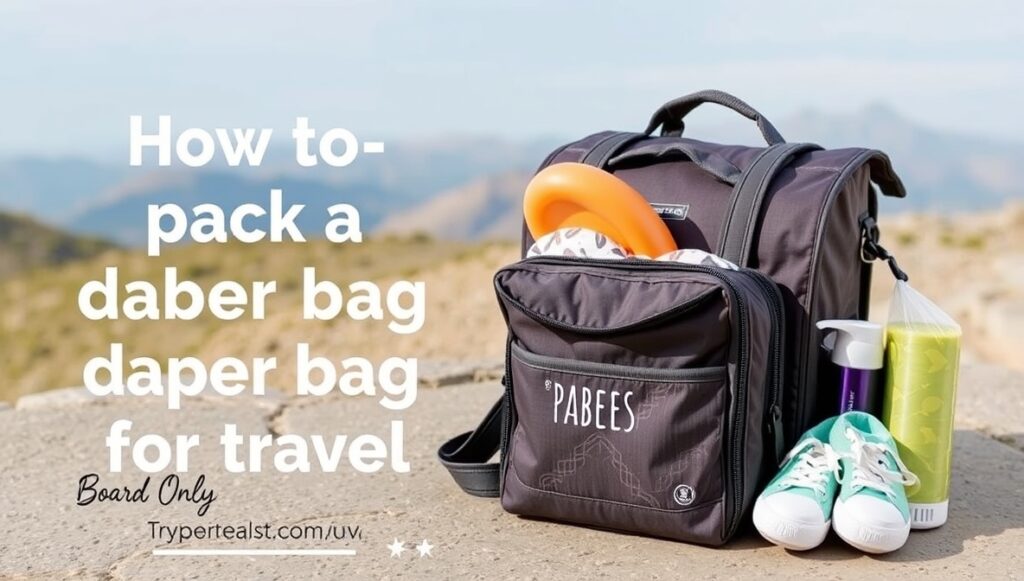
Blowouts, spit-up incidents, and spilled pouches are a fact of life when traveling with a baby. Packing the right clothing items means a messy moment stays a minor inconvenience rather than a trip-derailing disaster.
- At least two complete outfit changes for your baby, including socks
- One extra shirt for yourself — blowouts and projectile spit-up do not respect adults
- A lightweight muslin swaddle blanket that doubles as a nursing cover, stroller shade, or impromptu floor mat
- Two to three burp cloths
- A wet/dry bag to separate clean and soiled clothing in the same compartment
- Soft washcloths for quick clean-ups without a full wipe
A lightweight blanket is one of the most versatile items in any travel diaper bag — it can be used for warmth, shade, tummy time, or extra padding during diaper changes.
Entertainment and Soothing Items
The difference between a content baby and a crying one during a two-hour flight often comes down to how well you packed for entertainment. Keeping little ones engaged in unfamiliar environments is both an art and a strategy.
- One or two favorite compact toys (cars, soft blocks, small stuffed animals)
- A teether for babies who are teething
- Board books with bright images or lift-the-flap features
- A pacifier and a pacifier wipe or case if your baby uses one
- A new toy wrapped up and revealed mid-flight for maximum novelty effect
- A tablet or phone pre-loaded with downloaded shows, songs, and games for older babies and toddlers
- A small pair of child-safe headphones for toddlers
The novelty principle is worth emphasizing: packing a diverse mix of new and small toys, books, and activities makes a significant difference, especially for babies six months or older.
Parent Essentials
Do not forget yourself. How to pack a diaper bag for travel also means leaving room for the items you personally need to function on a travel day.
- Wallet, ID, and travel documents in an easily accessible exterior pocket
- Phone, earbuds, and a compact portable charger
- Your own snacks and a reusable water bottle
- Tissues and a small travel pack of personal wipes
- Any prescription medications for yourself or your baby
- A basic first aid kit: bandages, infant pain reliever, thermometer, and any specific remedies your doctor has recommended for travel
How to Organize Your Diaper Bag for Quick Access
Packing the right items is only half of knowing how to pack a diaper bag for travel. How you arrange those items determines whether you can function under pressure — like during a turbulent flight when your baby suddenly needs a change and you are balancing them on a tiny airplane lavatory fold-down table.
These organizational principles make a real difference:
Use category pouches. Place all diaper change items in one zip pouch, all feeding supplies in another, and all entertainment items in a third. Grab the pouch you need without emptying the whole bag.
Put the most-used items in exterior pockets. Hand sanitizer, pacifiers, wipes, and snacks should never require unzipping the main compartment. Dedicate exterior and top pockets to these.
Keep parent items in the very bottom or a separate internal pocket. Your wallet, phone, and keys do not need to be accessed every five minutes. Placing them below the baby items keeps them safe but out of the way.
Pre-pack a mini changing kit. A small separate pouch with one diaper, wipes, a changing pad, and sanitizer means you can grab this single pouch for quick changes without lugging the entire bag to the restroom.
Use zip-top bags as organizers. Grouping items in labeled zip bags gives you an extra layer of containment and makes it easy to identify contents at a glance.
Packing Differences by Trip Type
Understanding how to pack a diaper bag for travel means recognizing that a flight requires different preparation than a road trip or an overnight stay.
| Trip Type | Key Adjustments |
|---|---|
| Flight under 3 hours | Carry only essentials; buy diapers at destination |
| Long-haul flight (5+ hours) | Double all diaper and clothing quantities; add extra entertainment |
| Road trip | Use a large tote with more space; pack a car-accessible cooler |
| Overnight stay | Add pajamas, a sleep sack, and comfort items from home |
| International travel | Include copies of health records and any required medications |
For road trips specifically, you have the advantage of your entire car as backup storage. Keep a smaller “active bag” within reach of the passenger seat and store the bulk of your supplies in the trunk or a separate bag. This prevents you from packing everything into one overloaded diaper bag and making it impossible to find anything quickly.
TSA Rules and Airline Policies Every Parent Should Know
One of the most anxiety-inducing parts of learning how to pack a diaper bag for travel for the first time is figuring out what you can and cannot bring through airport security. The good news is that the rules are more parent-friendly than most people assume.
TSA liquid rules for baby items: Baby formula, breast milk, toddler drinks, and juice are permitted in quantities greater than 3.4 ounces and do not need to fit in your quart-sized liquid bag. You must declare these items at the security checkpoint and be prepared for them to be screened separately. Baby food pouches and purees in containers over 3.4 ounces also fall into this exemption.
Diaper rash cream: This counts as a liquid. Use a travel-size container of 3.4 ounces or less that fits in your clear liquids bag, or pack a larger size in your checked luggage.
Diaper bags as carry-ons: Most major airlines allow a diaper bag as an additional carry-on item beyond your standard allowance, though policies vary. Check with your specific airline before travel day to avoid surprises at the gate.
Changing facilities on planes: Most commercial aircraft have a fold-down changing table in at least one lavatory. If you cannot find it, ask a flight attendant — they can direct you to the right restroom and are generally very understanding about families traveling with infants.
Adjusting Your Packing by Baby’s Age
How to pack a diaper bag for travel looks meaningfully different depending on whether you are traveling with a newborn, a four-month-old, or a fourteen-month-old toddler.
Newborns (0–3 months): Pack more diapers than you think you need, a swaddle, a pacifier, nursing or formula supplies, and minimal entertainment — newborns sleep a great deal. Include gas drops and gripe water if your baby uses them, as travel can cause more gas than usual.
Young babies (4–8 months): Add teethers, soft toys, and board books. Introduce baby food pouches if solids have started. Keep a familiar blanket or stuffed animal for comfort in new environments.
Older babies and young toddlers (9–18 months): Snacks become a major item. Sippy cups, self-feeding utensils, and finger foods should have their own dedicated section. Entertainment needs increase — tablets with downloaded content are worth the bag space at this stage.
Common Packing Mistakes to Avoid
Even parents who understand how to pack a diaper bag for travel well can fall into a few recurring traps:
- Packing so many diapers that there is no room for anything else — plan to buy at your destination instead
- Forgetting a spare outfit for yourself, not just the baby
- Relying entirely on a single entertainment toy that loses its appeal in the first thirty minutes
- Forgetting to refill the bag the night before a flight, only to discover empty wipe packs the next morning
- Packing full-size bottles of diaper cream that get confiscated at security
- Ignoring the bag’s weight before adding parent items — a heavy bag becomes exhausting quickly
Frequently Asked Questions
How many diapers should I pack for a flight?
The standard guidance is one diaper for every two hours of travel time, plus two to four additional diapers as a buffer for delays. For a four-hour flight, eight to ten diapers is a reasonable amount. For very long flights or travel days with connections, pack more liberally — running out is far more stressful than carrying a few extras.
Can I bring breast milk and formula through airport security?
Yes. The TSA classifies breast milk, formula, and juice as medically necessary liquids and allows them in quantities greater than the standard 3.4-ounce rule. Declare them at the security checkpoint and be prepared for separate screening, which may include visual inspection or testing of the liquid. This process is routine and rarely causes significant delays.
Should I pack a full-size changing pad or a foldable one?
A foldable or roll-up changing pad is far better suited to travel than a rigid full-size version. It takes up minimal space, can be wiped clean easily, and fits into most diaper bag pockets. Some parents use a travel-size waterproof mat instead — either option works well.
What is the best type of diaper bag for air travel?
A backpack-style diaper bag with multiple organized compartments is the near-universal recommendation for air travel. It keeps your hands free at the airport, fits in the overhead bin, and distributes weight more comfortably than a shoulder tote during a long travel day.
How do I keep my diaper bag organized during a long trip?
Use small zip pouches or fabric organizer cubes to group items by category. Repack the bag every evening during your trip so you start each day with a fully stocked, organized bag. Replace used diapers, refill wipes, and restock snacks as soon as you return to your hotel or accommodation rather than waiting until the next morning.
Do I need a separate bag for the baby on a road trip?
For short road trips, a single well-packed diaper bag is usually sufficient. For longer road trips spanning multiple days, treat the main bag as your active bag for items you need en route, and pack a separate larger bag for the bulk of supplies — extra diapers, full clothing packs, and backup supplies — to store in the trunk.
Can I use a regular backpack instead of a diaper bag?
Absolutely. Any backpack with sufficient organization — multiple pockets, comfortable straps, and enough volume — works perfectly. Many parents prefer regular backpacks because they are less identifiable as baby bags and feel less bulky. The key is creating your own organizational system using pouches and zip bags since purpose-built diaper bags often have features like insulated bottle holders built in.
A Final Word
Knowing how to pack a diaper bag for travel is genuinely one of those skills that transforms the travel experience with a baby. The first trip is the hardest — you overpacked some things, forgot others, and discovered mid-flight that your most-needed item was at the very bottom. Every subsequent trip gets easier. Use this guide as your starting framework, adjust it to your baby’s specific needs and temperament, and remember that the goal is not a perfectly packed bag — it is a bag that is packed well enough to handle whatever the journey brings.